The Pot Doesn't Know Your Cycle: One Family Dinner, Four Different Plates
Photo: Hans Bernhard Schwerin, Public domain, via Wikimedia Commons
There is a particular kind of tired that comes from cooking two dinners. Not the chopping — the standing. It's 6:40 on a Tuesday, everyone else is already eating, and you're at the stove scraping a second pan because one person in this house is on Cycle 3 and the other three are not.
Most families try to fix this with separate meals. It works for about eleven days. Then the diet dinner gets skipped on a rough night, or the family dinner gets resented, and eventually everyone is eating takeout and nobody feels good about it.
The fix isn't a better diet recipe. It's a different structure for the same dinner.
Stop Building Two Menus
A short-order kitchen is what you get when every eater gets a custom order. It's exhausting, it's expensive, and it quietly teaches everyone that healthy food is a separate thing that arrives on a separate plate.
The alternative is to cook one meal and treat plating as the variable. Same pot, same pan, same table — different assembly. Call it a base-and-boost dinner: a neutral foundation everyone shares, plus a small bar of extras that lets each person push their plate toward the cycle they're actually running.
Cook the Base Like You're Feeding the Whole Table
The base is three things: a protein, a vegetable, and a starch. Cook them once, and cook them plain. Not bland — plain. Salt, pepper, a little oil, and save the big flavors for later.
Bases that hold up all week:
- Sheet-pan chicken thighs, roasted broccoli, baby potatoes
- Ground turkey with taco seasoning, black beans, rice, shredded cabbage
- Baked salmon, green beans, farro
- A big pot of chili with beef and kidney beans, rice on the side
- Stir-fried chicken and snap peas over rice, sauce served separately
The one non-negotiable: there is no diet version of the base. If the family is eating chicken thighs, so are you. Portion size and boosts handle the difference — not a sad, separate chicken breast.
The Boost Bar Does the Cycle Work
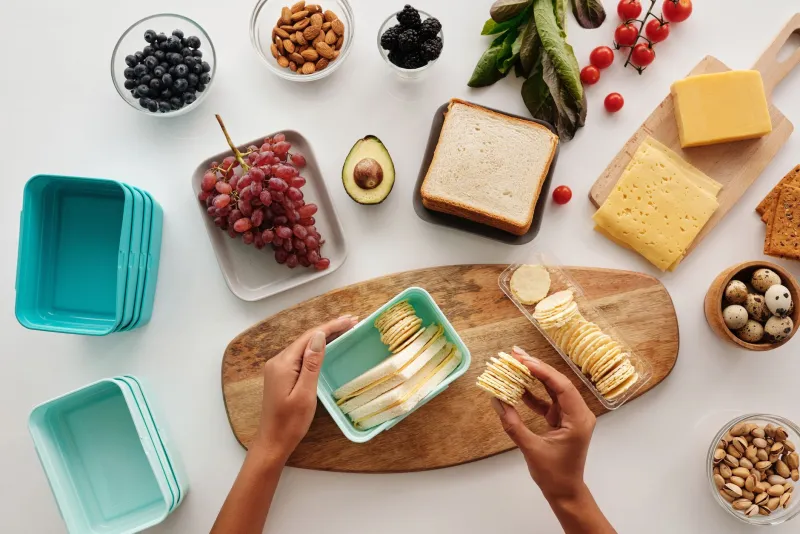
Boosts are the small, high-flavor, high-variability items you set out in bowls. They're what turn one dinner into four plates. Think:
- Sauces and dressings: lemon yogurt, salsa, chimichurri, hot honey, soy-ginger
- Crunch: toasted almonds, pepitas, crushed tortilla chips, everything seasoning
- Richness: feta, parmesan, avocado, a drizzle of olive oil
- Volume: extra roasted vegetables, a bag of slaw mix, pickled onions
- Extra carbs or protein for whoever needs them: a second scoop of rice, leftover shredded chicken
Four to six boosts is plenty. More than that and it stops being dinner and starts being a salad bar, which is charming exactly once.
What the Four Plates Actually Look Like
You don't need a spreadsheet at the table, but it helps to know the general shape.
Cycle 1 is about proving a real dinner fits. Plate: a full serving of protein, a genuinely large pile of vegetables, a normal-but-not-huge starch, one boost. No bargaining, no skipping.
Cycle 2 is the habit phase, so the plate is mostly about hunger. Same shape as Cycle 1 — but if you're raiding the pantry at 9 p.m., the answer is more protein and more vegetables at dinner, not more willpower.
Cycle 3 gets more deliberate. Starch is measured rather than eyeballed, boosts are chosen rather than piled, protein anchors the plate. It should still look like dinner, not a punishment.
Cycle 4 is the one people forget. The plate here should look almost exactly like everyone else's, because the whole point of Cycle 4 is that the habits travel. If your Cycle 4 plate is still a separate meal, something upstream didn't stick.
Nobody Wants to Be Handed the Diet Plate
This is where most well-meaning plans fall apart: labeling. The moment a plate arrives with an implicit name tag, the person eating it feels singled out and the person who didn't get it feels judged. Both are bad for a Tuesday.
Serve family style. Base in the middle, boosts on the counter, everyone builds. You take your portion; your spouse takes theirs. No commentary, no scorekeeping, no raised eyebrows about second helpings.
For picky kids, deconstruct instead of negotiating. The components are already separate — that's the beauty of this setup. A kid who wants plain chicken, plain rice, and broccoli with absolutely nothing touching it is eating the same dinner you are, just assembled differently. That counts.
And for the spouse who doesn't do diets? The boost bar is the answer. They can add cheese, sauce, extra rice, and a second helping without a second pan or a second conversation.
One Rule: Cook Once, Assemble Forever
The rule that keeps this from sliding back into a restaurant: you cook one meal. Boosts get assembled, not cooked — or they get batched on Sunday so Tuesday is just opening containers. If somebody wants something different, the boost bar is the difference.
A Tuesday example, quickly. Sheet-pan chicken thighs, broccoli, sweet potato wedges. On the counter: lemon yogurt, feta, hot honey, toasted almonds, salsa, and Monday's leftover rice. The Cycle 1 plate gets extra broccoli and a spoon of yogurt. Cycle 2 gets a second piece of chicken because practice ran late. Cycle 3 takes a measured scoop of sweet potato and skips the honey. Cycle 4 gets a little of everything. The kid gets chicken, plain rice, and three broccoli florets, and nobody makes it weird.
One pan. One cutting board. Four plates, all from the same dinner.
That's the whole trick. You're not cooking for a diet and a family. You're cooking for a family, and letting the plate do the rest.